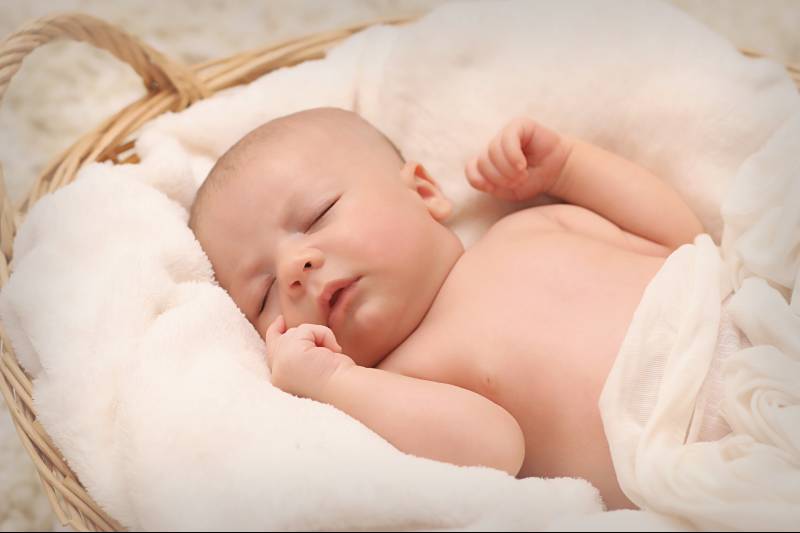
There is no guarantee that a baby conceived through donor egg IVF will look like the recipient. However, using donor eggs does not mean the baby will not resemble her, nor does it prevent deep bonding or a strong sense of parenthood.
Physical resemblance depends on complex genetics and careful donor matching. Pregnancy, environment and daily care also play central roles in a child’s development and identity.
This article addresses one of the most common and emotionally charged questions for women considering donor egg IVF.
Donor Egg Babies and Resemblance – Summary
- Many intended mothers worry a donor egg baby will not resemble them
- Fertility clinics match egg donors to recipients by physical and ethnic traits
- Genetics is complex and cannot precisely predict appearance
- Carrying the pregnancy plays an important biological role in development
- Bonding and family identity are not dependent on shared DNA
- Many parents come to redefine parenthood around connection rather than genetics
Why This Question Is So Common
Women who consider IVF with donor eggs are often coming from a long and difficult fertility journey. The question “Will the baby look like me?” usually reflects deeper concerns:
- Will the baby feel like mine?
- Will I bond naturally?
- Will other people see me as the mother?
- What will my children look like as they grow up?
These thoughts are normal and shared by many women facing donor egg treatment.
How Egg Donors Are Matched to Recipients
In many European countries, egg donation is anonymous by law. Because recipients cannot choose donors based on photographs, ivf clinics are required to perform phenotype matching.
It commonly includes:
| Matching characteristic | Included in phenotype matching |
|---|---|
| Hair colour | Yes |
| Hair texture | Yes |
| Eye colour | Yes |
| Skin tone | Yes |
| Complexion | Yes |
| Height | Yes |
| Body build | Yes |
| Ethnic background | Yes |
| Blood type | When relevant |
| Rh factor | When relevant |
This process is designed to maximise the likelihood that the donor-conceived child resembles the recipient and fits naturally within the family.
It does not guarantee a particular appearance.
What Genetics Can and Cannot Predict
Genetic inheritance in donor egg IVF
A baby’s DNA comes from:
- The egg donor
- The sperm source
Genes determine traits such as eye colour potential, hair colour potential, height range, and blood type. Some commonly cited inherited traits include freckles, dimples, handedness, tongue rolling, and colour blindness.
These traits are encoded in DNA and are not altered by who carries the pregnancy.
Why appearance cannot be predicted
Human genetics is far more complex than the simple dominant-recessive model often taught in school. Even the basic inheritance principles identified by Gregor Mendel explain only part of how traits are passed on.
Most physical characteristics are influenced by:
- Multiple genes
- Interactions between genes
- How genes are expressed, not just which genes are present
This is why:
- Two blue-eyed parents can have a brown-eyed child
- Siblings can look very different from one another
- Children may resemble grandparents more than parents
These variations occur in all families, including those created without donor eggs.
Epigenetics and Pregnancy
Epigenetics refers to changes in how genes are expressed without altering the DNA sequence itself. In practical terms, this means the environment in which an embryo develops can influence how genetic instructions are carried out.
For donor egg IVF, this suggests:
- The same embryo could express traits differently in different uterine environments
- Health, nutrition, and overall pregnancy conditions matter
Epigenetics does not mean the recipient’s DNA is passed on. It means the pregnancy environment can influence development.
Which Traits Come From Which Source?
From the egg donor and sperm source
- DNA sequence
- Potential eye, hair, and skin colour
- Height range
- Blood type and Rh factor
From the pregnancy environment
- How genes are expressed
- Growth patterns
- Development influenced by health and care
As a result, a child may:
- Strongly resemble the donor
- Strongly resemble the sperm source
- Show mixed or unexpected traits
- Not clearly resemble any one person
There is no reliable way to predict which outcome will occur.
Emotional Bonding and Parenthood
Bonding is shaped by:
- Pregnancy experience
- Birth
- Caregiving and responsiveness
- Daily interaction and attachment
Shared DNA is not a requirement for forming a strong parent-child bond. Donor egg IVF changes how genetics enter a family, but it does not change how love, attachment, or identity develop.
A Realistic Perspective
There is no guarantee that a donor egg baby will look like the recipient just as there is no guarantee with genetically related children.
What can be relied on:
- Careful donor phenotype matching
- The biological role of pregnancy
- The emotional reality of parenting
Donor egg IVF replaces genetic certainty with biological complexity, not with distance from the child.
Frequently Asked Questions
Will my donor egg baby look like me?
It is possible but not guaranteed. Clinics match donors to recipients by physical traits such as hair, eye colour, skin tone and build, which maximises the chance of resemblance, but genetics is complex and unpredictable even in genetically related families.
Can donors be chosen by photographs?
In many European countries, no. Anonymous donation laws mean the clinic selects the donor using phenotype matching, rather than letting recipients choose from photographs.
Will a DNA test show a genetic relationship?
If the egg was donated, a DNA test would not show a genetic link between the recipient and the child, even though she is the birth mother and the legal mother.
Does epigenetics mean the recipient passes on her genes?
No. Epigenetics affects how the baby’s genes are expressed during pregnancy, but it does not change the DNA sequence, so the recipient’s own genes are not inherited.
Final Thoughts
Donor egg IVF changes how genetics contribute to a family, but it does not change what makes a family real. Appearance cannot be guaranteed in any form of parenthood. What donor egg IVF offers is the possibility to carry, give birth to, and raise a child within one’s own body, environment, and family.