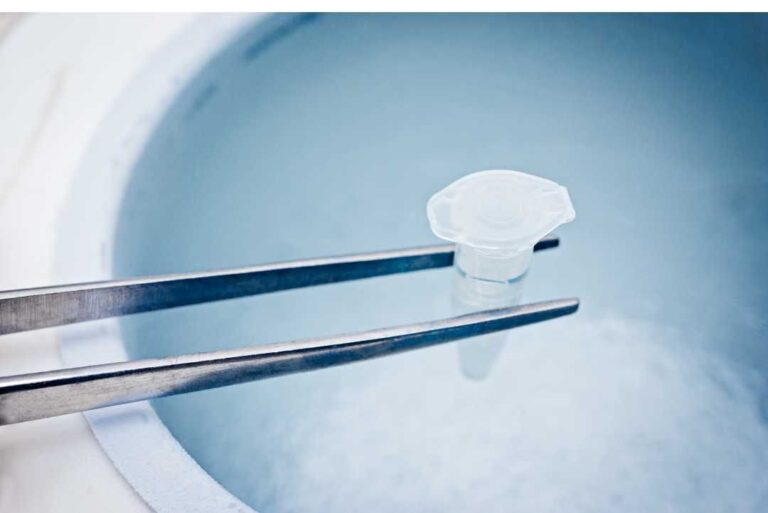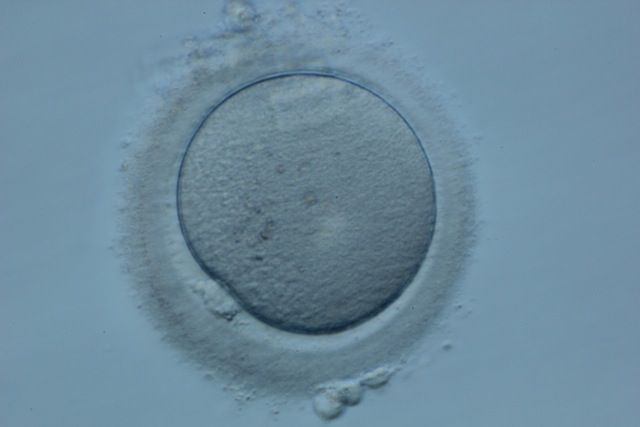
Embryo donation allows patients to achieve pregnancy using embryos donated from another couple’s IVF treatment. It is available in many European countries, with costs ranging from about €2,000 to €5,500 depending on location, legal access, and clinic policies.
What Embryo Donation Really Means in Practice
Embryo donation is a form of assisted reproduction in which embryos that remain unused after another couple’s IVF treatment are donated for reproductive use.
These embryos may otherwise be:
- Kept in storage
- Discarded
- Donated for scientific research
When donated for reproductive purposes, the embryo is transferred to the recipient’s uterus with the aim of achieving pregnancy.
A crucial clarification is that embryo donation is not adoption. Legally, it is treated as a transfer of reproductive material. Donors have no parental rights or responsibilities, and they are not listed as parents on the child’s birth certificate.
Embryo Donation vs. Double Donation: Understanding the Difference
These two treatments are often confused but are fundamentally different.
Embryo Donation
- Uses embryos already created during another couple’s IVF cycle
- No new IVF cycle is required
- Embryos are usually frozen and ready for transfer
Double Donation
- New embryos are created using donated eggs and donated sperm
- Requires a full IVF process
- Often recommended in cases such as ovarian failure, genetic disease risk, lack of viable sperm, or repeated IVF failure
Both options involve no genetic link to the recipient, but they differ in complexity, timing, and cost.
You might be interested in reading IVF Double Donation: Complete Guide to Donor Egg and Donor Sperm IVF in Europe
Where Embryo Donation Is Available in Europe
Embryo donation is offered in many European countries, but not everywhere. Availability depends on national legislation, donor consent, and clinic policies.
Countries Where Embryo Donation Is Not Available
Embryo donation is not permitted in:
- Germany
- Norway
- Switzerland
- Turkey
Access Rules: Who Can Receive Embryo Donation?
Eligibility varies significantly by country and may depend on:
- Marital or relationship status
- Whether single women are permitted
- Whether same-sex couples are eligible
- Limits on the number of recipient families per donor
Examples of Access by Country
- United Kingdom, Spain, Sweden, Denmark, North Cyprus: Broad access, no restrictions based on marital status
- Ukraine and Russia: Available to single women, not to same-sex couples
- Poland and Czech Republic: Restricted access; not available to single women or same-sex couples
Because regulations differ, confirming eligibility before choosing a destination is essential.
Donor Anonymity: What Future Children Can Know
Donor anonymity rules differ across Europe and are a key consideration for many patients.
Two Main Systems Exist
- Anonymous donation: In most European countries, donor identity is fully protected
- Identity disclosure at adulthood: In countries such as Austria, Croatia, Finland, Malta, and the United Kingdom, children can request identifying donor information once they reach legal adulthood
The choice of country therefore influences not only treatment access, but also long-term family considerations.
How Much Does Embryo Donation Cost?
Costs vary by country and clinic, and published prices often do not tell the full story.
Typical Cost Ranges
- Czech Republic: From €2,000
- Spain: Up to €5,000
- United Kingdom: £3,400–£5,500
When comparing prices, it is important to clarify:
- Whether embryos are exclusive to one recipient
- If donor screening is included
- Whether a replacement embryo is offered if treatment fails
- Expected waiting times
Many clinics do not list embryo donation packages openly, making direct enquiries necessary.
Who Typically Chooses Embryo Donation?
Embryo donation is often considered by patients who:
- Have experienced repeated IVF failures
- Have diminished ovarian reserve
- Cannot use their own eggs or sperm due to genetic conditions
- Are single women seeking an alternative to egg or sperm donation
For many, it represents a balance between medical effectiveness, reduced treatment complexity, and affordability.
Comparison Overview: Access and Costs
| Country | Eligible Patients | Donor Anonymity | Estimated Cost |
| United Kingdom | Broad access | Identity possible at adulthood | £3,400–£5,500 |
| Spain | Broad access | Anonymous | Up to €5,000 |
| Czech Republic | Restricted | Anonymous | From €2,000 |
| Ukraine / Russia | Single women only | Anonymous | Varies |
| Poland | Married heterosexual couples only | Anonymous | Varies |
| Austria / Croatia / Finland | Depends on country | Identity possible at adulthood | Varies |
Key Takeaway
Embryo donation is a legally distinct, widely available fertility treatment in Europe, but access rules, donor anonymity, and costs vary substantially by country. Understanding where you are eligible, what information may be available to future children, and what is included in treatment pricing is essential before committing to a destination.