Last updated: March 5, 2026
Access to NHS-funded IVF in England varies by Integrated Care Board (ICB). Differences include:
- The maximum number of IVF cycles funded
- The age limits for treatment
- Whether a full cycle (as defined by NICE) is offered
- Parental status restrictions
- Rules on previous IVF cycles
- Whether cryopreservation (embryo freezing) is funded
- Additional requirements for female same-sex couples
While some criteria are broadly consistent (e.g., BMI range, non-smoking status, duration of trying to conceive), funding and eligibility details depend on your local ICB policy .
Key takeaway: Local ICB policies may change and should always be checked, always verify locally.
NHS-Funded IVF in England – Summary
- Most ICBs fund 1 cycle (often non-full), though some fund 2 or 3 cycles.
- Age limits commonly range up to 40 or 42, with some extended policies.
- Several ICBs require no children from current or previous relationships.
- Cryopreservation funding ranges from 1 to 5 years, or may not be funded at all.
- Female same-sex couples often must self-fund 6–12 rounds of artificial insemination before NHS eligibility
- Policies are subject to change; always check your ICB’s full commissioning document.
You might be interested in reading: NHS-Funded IVF Guide: Eligibility, Regional Differences, and Access in the UK
Understanding NHS IVF Access in England
What Is a “Full Cycle” of IVF?
A full cycle, as defined by NICE fertility guidelines, includes:
- One episode of ovarian stimulation
- Transfer of any resulting fresh embryos
- Transfer of all viable frozen embryos
A full cycle ends when:
- All viable embryos have been transferred, or
- A pregnancy occurs
If an ICB offers a non-full cycle, it does not meet this NICE definition. However, additional embryos may still be frozen and used later, depending on the commissioning policy .
General Eligibility Requirements Across Most ICBs
While funding numbers differ, most ICBs require:
- 2 years of regular unprotected intercourse (heterosexual couples)
- 6 rounds of artificial insemination (female same-sex couples) before referral
- A BMI between 19 and 30 for the woman conceiving
- Both partners must be non-smokers
These criteria are largely consistent across England .
You can see the full information here
IVF Cycles & Age Limits by ICB
Below is a structured overview of how funding differs.
ICBs Offering 3 Full Cycles (Most Comprehensive Access)
- North East and North Cumbria
- 3 full cycles (up to age 40)
- 1 full cycle (age 40–42)
- 3 full cycles (up to age 40)
- North East London
- 3 full cycles (up to age 40)
- 1 full cycle (age 40–42)
- 3 full cycles (up to age 40)
These ICBs represent some of the most comprehensive NHS IVF access policies in England .
ICBs Offering 2 Full Cycles
- South East London (age 23–39)
- South Yorkshire (age 18–42)
Both count previous IVF cycles toward the total offered .
ICBs Offering 1 Full Cycle
Examples include:
- Derby and Derbyshire (up to age 42)
- Lancashire and South Cumbria (age 18–42)
- Lincolnshire (up to age 40)
- Northamptonshire (up to age 42)
- Nottingham and Nottinghamshire (up to age 42)
- Shropshire, Telford and Wrekin (age 18–40)
- West Yorkshire (age 18–42)
These policies align more closely with NICE guidance than non-full cycle offerings .
ICBs Offering Non-Full Cycles (Most Common)
Many ICBs fund 1 non-full cycle, including:
- Birmingham and Solihull
- Black Country
- Bristol, North Somerset and South Gloucestershire
- Devon
- Dorset
- Frimley
- Hampshire and Isle of Wight
- Hertfordshire and West Essex
- North West London
- Somerset
- South West London
- Staffordshire and Stoke-on-Trent
- Sussex
Age limits typically range up to 40 or 42, with some as low as 35 .
ICB Policies Under Review
At the time of reporting:
- Cheshire and Merseyside
- Greater Manchester
- Humber and North Yorkshire
- Leicester, Leicestershire and Rutland
Policies may change; always verify locally .
Parental Status Restrictions
A major variation across ICBs concerns existing children.
Common requirements include:
- No children from current or previous relationships (most restrictive)
- At least one partner must have no children
- No children from the current relationship
Some ICBs include adopted children in their definition . This can significantly impact eligibility regardless of age.
Previous IVF Cycles
Policies vary in how they count prior treatment:
- Some ICBs allow no previous NHS or self-funded cycles
- Others permit 1–2 self-funded cycles
- Some count all previous cycles toward the total funded
If you’ve previously undergone IVF (NHS or private), this may affect eligibility .
Cryopreservation Funding
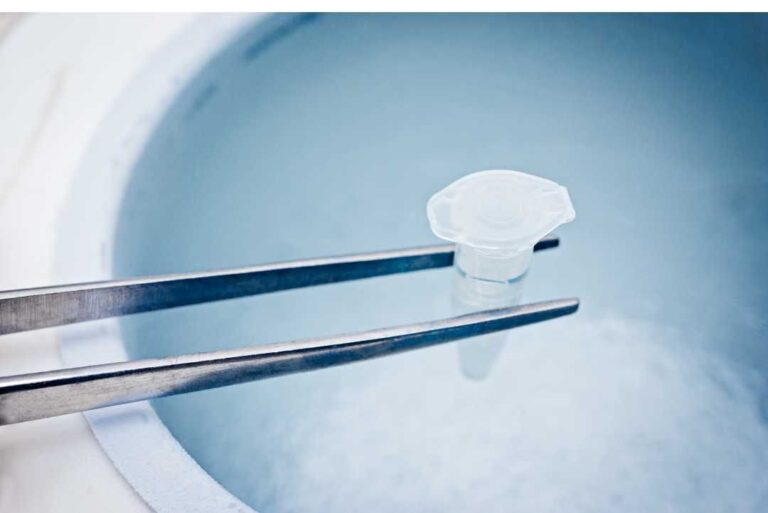
Cryopreservation refers to the frozen storage of viable embryos after fresh transfer.
Funding differences include:
- 1 year (common)
- 2–3 years (several ICBs)
- Up to 5 years (Cornwall and the Isles of Scilly; Sussex)
- Not funded (e.g., Cambridgeshire and Peterborough; Herefordshire and Worcestershire)
Patients may pay privately to extend storage beyond funded limits .
Additional Access Rules for Female Same-Sex Couples
Eligibility typically requires self-funded artificial insemination before NHS IVF referral.
6 Self-Funded Cycles Required (Common Standard)
Examples:
- Birmingham and Solihull
- Black Country
- Bristol, North Somerset and South Gloucestershire
- Devon
- Dorset
- Gloucestershire
- Kent and Medway
- North Central London
- Suffolk and North East Essex
12 Self-Funded Cycles Required
Examples:
- Buckinghamshire, Oxfordshire and Berkshire West
- Cambridgeshire and Peterborough
- Cornwall and the Isles of Scilly
- Frimley
- Hampshire and Isle of Wight
- Lancashire and South Cumbria
- North West London
- South West London
Some ICBs fund insemination cycles via NHS instead of requiring self-funding (e.g., Somerset, South Yorkshire, West Yorkshire, Surrey Heartlands) .
What This Means for Patients
Access to NHS-funded IVF depends on:
- Your postcode (ICB area)
- Your age
- Whether you have children
- Previous fertility treatment
- Your relationship type
- BMI and smoking status
Two patients of the same age could receive different funding options depending on their ICB.
Related Articles:
- IVF with Donor Eggs in the UK – Explained
- Why British Seek Fertility Treatment Abroad: Exploring IVF Options Across Europe
How many IVF cycles does the NHS fund?
It depends on your ICB. Some fund 1 non-full cycle, others fund 1–3 full cycles .
What is the maximum age for NHS IVF?
Most ICBs set the upper age between 40 and 42, though cycle availability may reduce after 40 .
Can I get IVF if I already have children?
Many ICBs require that neither partner has any children from current or previous relationships .
Is embryo freezing covered by the NHS?
Often yes, but storage length varies by ICB (1–5 years). Some ICBs do not fund cryopreservation .
Do female same-sex couples have to self-fund treatment first?
In most ICBs, yes — 6 to 12 cycles of artificial insemination may be required before NHS IVF access. However, policies may change; always verify locally .