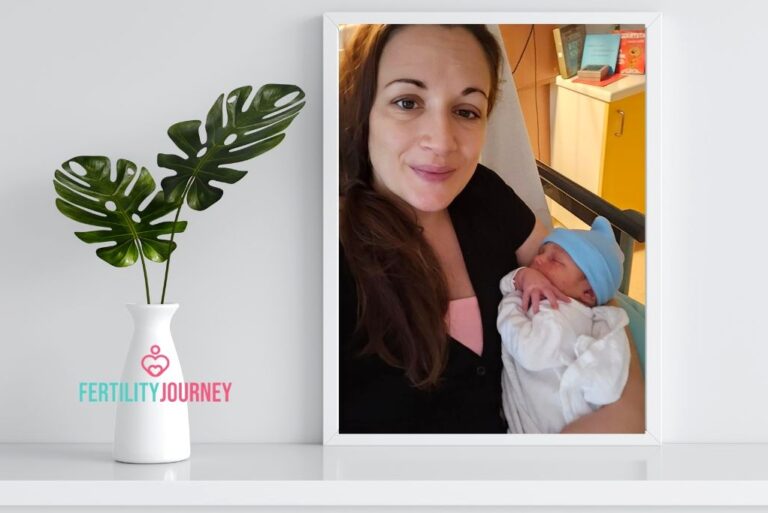
At 16, Kirstie received devastating news that would shape her entire adult life: she had premature ovarian failure. With no ovaries visualized during keyhole surgery and no periods ever, doctors confirmed there was zero chance she could conceive naturally. She would need HRT for life and would experience menopause symptoms decades before her peers.
“I was obviously in complete shock but at 16 years of age, I was not able to process the diagnosis,” Kirstie recalled.
It wasn’t until she met Chris at 19 that the reality truly sank in. Their fertility journey would span three countries, four embryo transfers, one heartbreaking silent miscarriage, and finally, in December 2021, the birth of their son Jamie—five weeks early but healthy and perfect.
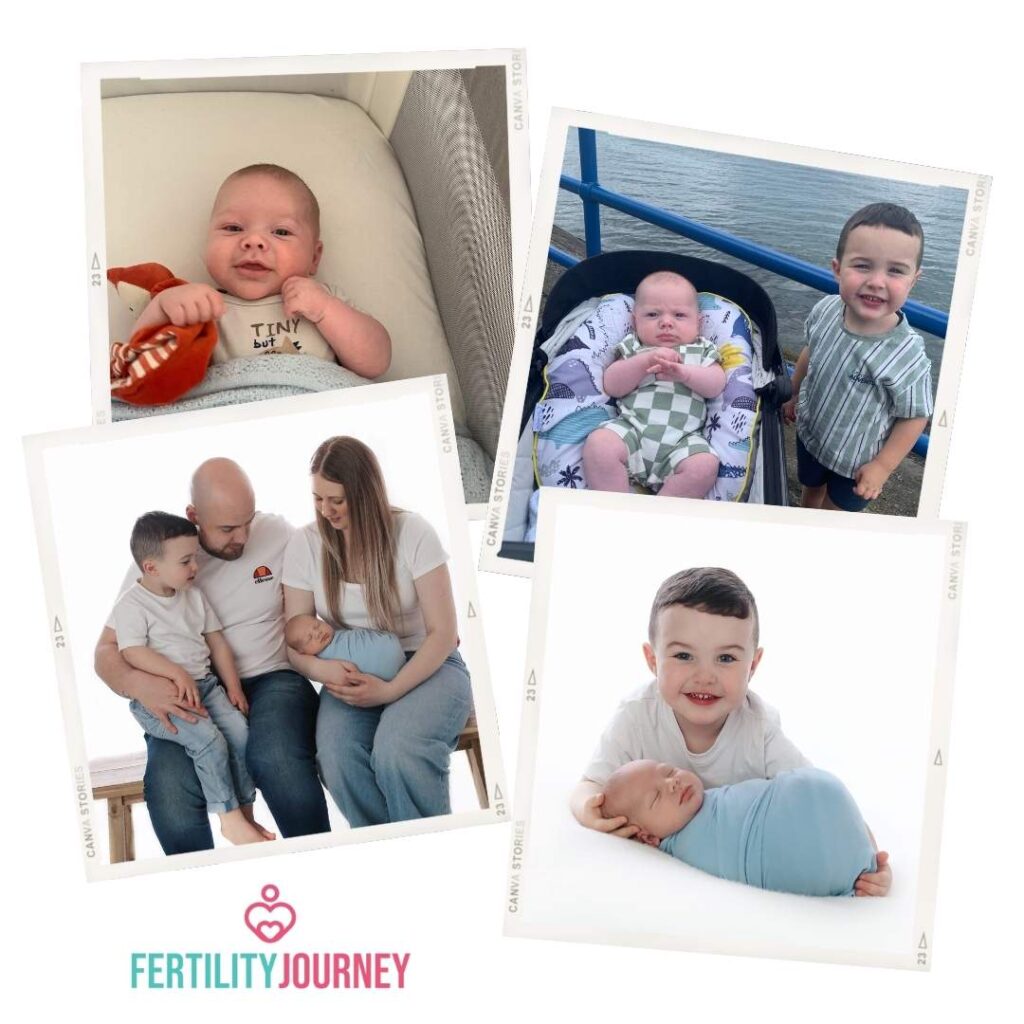
Nearly three years later, Kirstie and Chris were selected for UR Vistahermosa’s 2024 Fertility Journeys Project. On March 22nd, 2025, they welcomed baby Jack at 37 weeks and six days, weighing 8lbs 3oz—the missing piece that completed their family.
“We never dreamt we would have one child, never mind two,” says Kirstie. “We are truly blessed.”
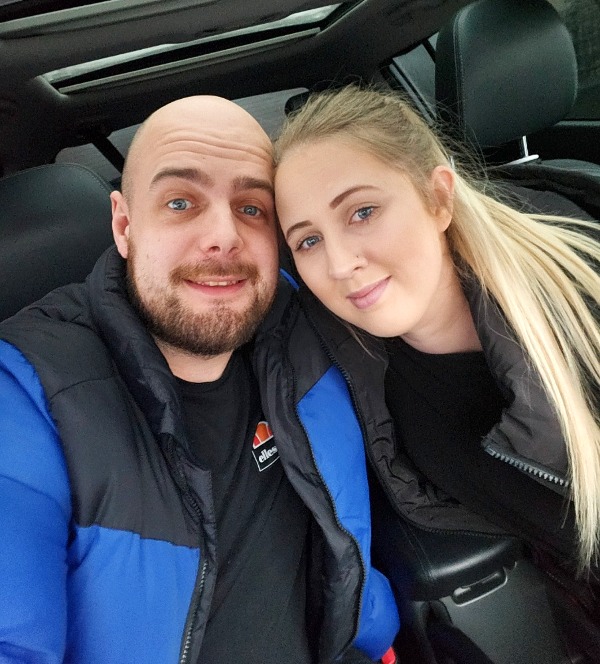
A diagnosis at 16 that changed everything
Kirstie’s fertility journey began long before she met Chris. At 16, having never had a period, doctors performed keyhole surgery and made a shocking discovery: they could not visualize any ovaries. The diagnosis was premature ovarian failure—essentially, menopause in her teens.
The medical implications were profound: she would be on HRT for the rest of her life, had zero chance of conceiving naturally, and would suffer menopause symptoms that normally impact women in their 50s. “It is very difficult to deal with,” Kirstie said.
But at 16, she couldn’t fully process what this meant for her future. It wasn’t until she met retail manager Chris in October 2012, when she was 19, that the diagnosis truly hit home. As their relationship became serious, they sought further advice—and quickly realized how rare Kirstie’s situation was. They couldn’t find anyone else who had received this diagnosis at such a young age.
The only path to parenthood would be through egg donation IVF.
Years of heartbreak across Europe
Kirstie and Chris’s fertility journey officially began in August 2016 with an NHS-funded round of IVF with egg donation in Northern Ireland. It failed, leaving them devastated.
“From here, we decided to go abroad to seek an egg donor as the rules in the UK make it very hard to receive anonymous egg donation,” Kirstie explained. They settled on a clinic in Crete, Greece.
In September 2018, they traveled to Greece for their first embryo transfer. Negative. They returned in April 2019 for a frozen transfer using their one remaining embryo. This time, they got a positive test and saw the heartbeat at six weeks. Hope surged—only to be crushed when the embryo stopped growing. Kirstie suffered a silent miscarriage at nine weeks and needed a D&C procedure.
“This was by far the hardest thing Chris and I have ever gone through. It took a long time to come to terms with this,” Kirstie said.
After taking time to heal, they chose a clinic in Madrid. But new obstacles emerged: COVID-19 caused massive delays, and Kirstie’s thyroid became overactive, requiring medication adjustments before they could proceed.
Finally, in May 2021—after lockdowns in both the UK and Spain—they traveled to Madrid for what felt like their last chance. They had only one embryo.
“We had a really good feeling this time and it turned out to be right,” Kirstie said. The test was positive. Despite severe hyperemesis gravidarum in early pregnancy, everything progressed smoothly. On December 30th, 2021, baby Jamie was born five weeks early but healthy.
After eight years of trying, three countries, and unimaginable heartbreak, Kirstie and Chris were finally parents.
Chosen for a second chance
With Jamie approaching two years old, Kirstie and Chris felt ready to grow their family. They had always followed Fertility Road’s Fertility Journeys Project closely and liked what they saw about UR Vistahermosa in Alicante.
“Believe it or not, with Jamie now being two years old, we actually really miss the whole IVF journey. It gave us something to chase, something to dream of and we both have the general mindset of never giving up,” Kirstie said.
The primary reason was simple: they wanted to give Jamie a sibling. And financially, after spending so much already, the Fertility Journeys programme offered “our only hope.”
When they discovered their application had been successful, they were ecstatic. “We were absolutely over the moon, and words can never express our level of gratitude towards the clinic for choosing us.”
A breath of fresh air at IVF clinic UR Vistahermosa
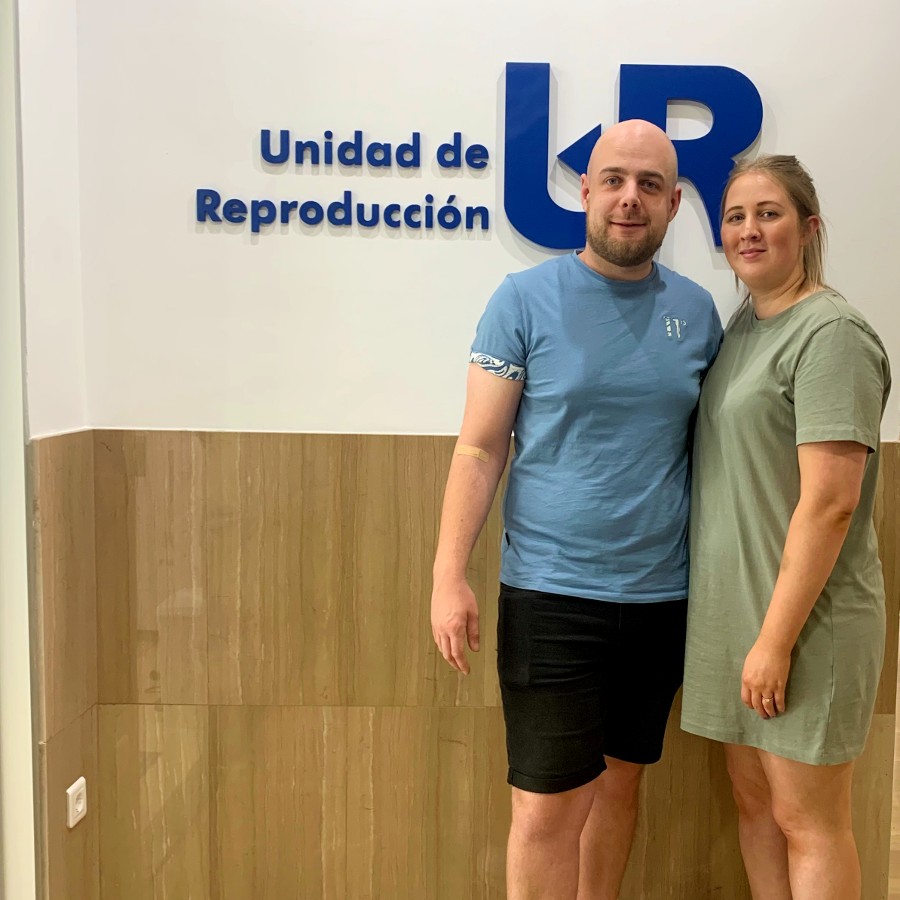
In May 2024, Kirstie and Chris flew to Alicante for their first appointment at UR Vistahermosa—and the experience was transformative.
“Our first impressions were really positive because it was busy, it was good to see that there were other couples at the clinic,” Kirstie recalled. “When we arrived, all the professionals that we had been speaking to via email came and introduced themselves and made us feel so welcome.”
Their coordinator, Christina, stayed with them throughout the entire visit. The gynecologist explained Kirstie’s treatment plan, performed an ultrasound and mock transfer test, and both partners completed blood screening. Chris provided his sample, which was frozen while the clinic began sourcing an egg donor.
“Our coordinator stayed with us the whole time we were there, it was very personal,” Kirstie said. “She came and explained it all and sorted our medication so we just had to go to the chemist. When we were getting our bloods taken, she booked us a taxi to take us back to the hotel. They even booked the hotel for us. We were gobsmacked, it was amazing.”
After eight years of fertility treatment across multiple countries, this level of care felt revolutionary. “We honestly could not fault the clinic and our experience was so pleasant… when we came out, it felt like a breath of fresh air.”
IVF with egg donation and the path forward
Given Kirstie’s premature ovarian failure, egg donation was not just recommended—it was the only option. UR Vistahermosa began the process of matching Kirstie with an anonymous egg donor while preparing her body for transfer.
Kirstie switched from HRT to the Microgynon pill in preparation. The embryo transfer was scheduled for July 2024—giving the clinic time to source the perfect donor and create high-quality embryos.
For a couple who had already been through so much, the professionalism and personal care at UR Vistahermosa gave them genuine confidence. “We feel like we’ve had a huge weight off our shoulders,” Kirstie said after their first visit.
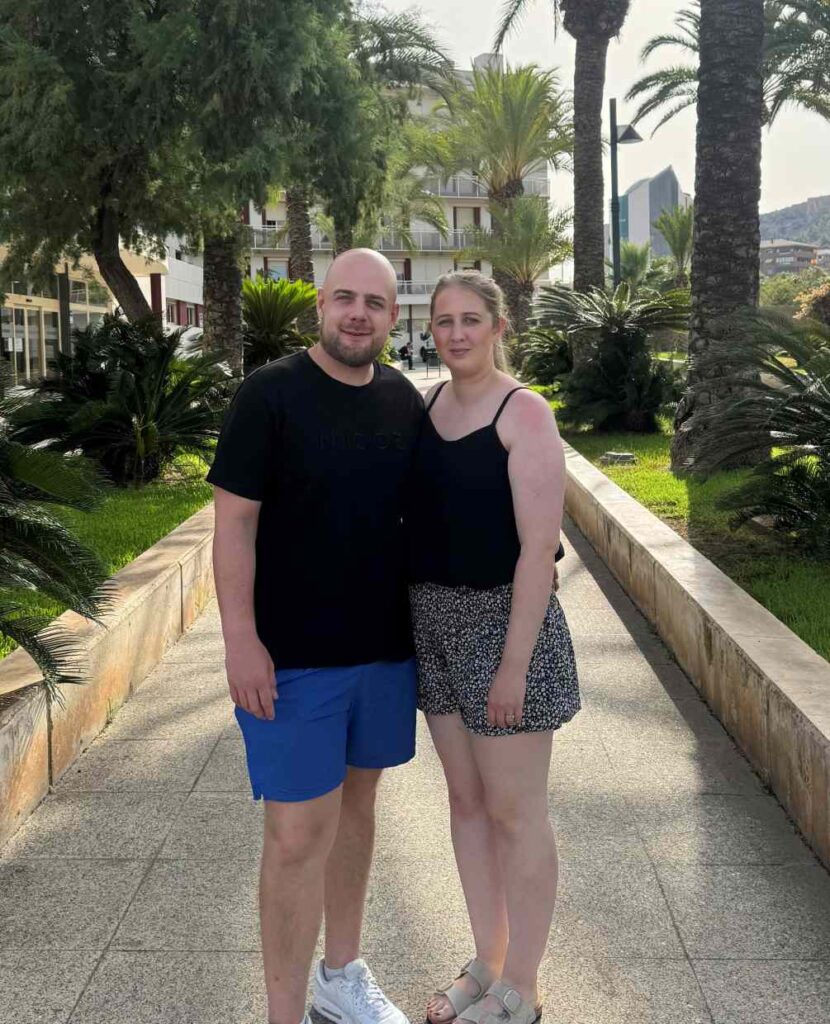
UR Vistahermosa’s ongoing support and reassurance
Throughout the process, UR Vistahermosa’s communication was exceptional. “All communications from UR Vistahermosa have been very clear and transparent. The doctors and patient care team have shown great kindness towards us,” Kirstie said.
Even after returning to Northern Ireland with two-year-old Jamie—the longest they had ever been apart from him—the clinic remained available. “I haven’t needed any support, but when I do contact the clinic, they’re more than happy to help, and they respond quickly. So I know they are always there in the background.”
This consistent support was crucial for a couple who had experienced so much disappointment and loss over the years.
The transfer: a grade A blastocyst
In late July 2024, Kirstie, Chris, and Jamie returned to Alicante (Spain) for the embryo transfer. After an ultrasound confirmed Kirstie’s womb lining was measuring a healthy 9mm, they were given the green light.
The family enjoyed a relaxing week in the Spanish sun before the transfer took place on July 19th. “We had a five-day blastocyst at grade A and the transfer went really well. The clinic were welcoming, friendly and reassuring,” Kirstie said.
She felt positive—the embryo quality was excellent, her womb lining was perfect, and her progesterone levels were good. “We have read so much good about the clinic. So that gives us hope.”
Despite her positivity, the two-week wait was agonizing. At just six days past transfer—earlier than recommended—Kirstie tested. Positive. She tested again every other day, terrified but hopeful.
“When I got a positive result, I couldn’t believe it. I was scared but at the same time we were absolutely delighted.”
A blood test at 14 days confirmed the pregnancy.
A frightening scare at six weeks
Kirstie’s early pregnancy mirrored her experience with Jamie—constant nausea and the return of hyperemesis gravidarum symptoms. “I feel so sick. I just feel sick 24/7,” she said. But the symptoms were reassuring: “If I lose the symptoms, I panic.”
Then, at six weeks, disaster seemed to strike. Kirstie woke up feeling fine, started getting ready, and suddenly was “saturated with blood.”
“I was really crampy and sore and literally dripping blood. I said to Chris ‘I think we’re having a miscarriage’ and I started to panic.”
They frantically searched for a private scan, finally securing an appointment in Belfast that Sunday evening. The wait was excruciating. After their silent miscarriage in Greece years earlier, Kirstie feared the worst.
But when the scan showed a tiny heartbeat, they “cried our hearts out.”
A follow-up scan at the early pregnancy clinic confirmed the baby was growing well and the bleeding was caused by a haematoma—frightening but not dangerous. UR Vistahermosa advised rest, and the bleeding eventually stopped.
A pregnancy filled with worry but hope
Throughout her pregnancy, Kirstie battled the same fears that haunt so many who have experienced loss. “I think when you know what’s ahead of you, it’s hard not to think the worst,” she said.
But having Jamie was a good distraction. And as the weeks progressed and scans continued to show a healthy baby, her confidence grew. By 16 weeks, when the sickness finally subsided, she could say: “I would say I’m in a better place now with the pregnancy, it’s getting more enjoyable.”
Jamie came to scans with them, learning about the baby in mummy’s belly. “I want Jamie to be included,” Kirstie explained.
Because she had gone into premature labor with Jamie at 35 weeks, the hospital kept extra close watch, scheduling multiple scans from 28 weeks onward. But despite the vigilance, the pregnancy progressed smoothly.
Jack’s arrival: a family complete
On March 22nd, 2025, Kirstie gave birth to baby Jack at 37 weeks and six days. He weighed a healthy 8lbs 3oz. The labor was smooth, with a natural delivery and no complications.
“Thank you for all you have done for us, helping us complete our family,” Kirstie told UR Vistahermosa and Fertility Road.
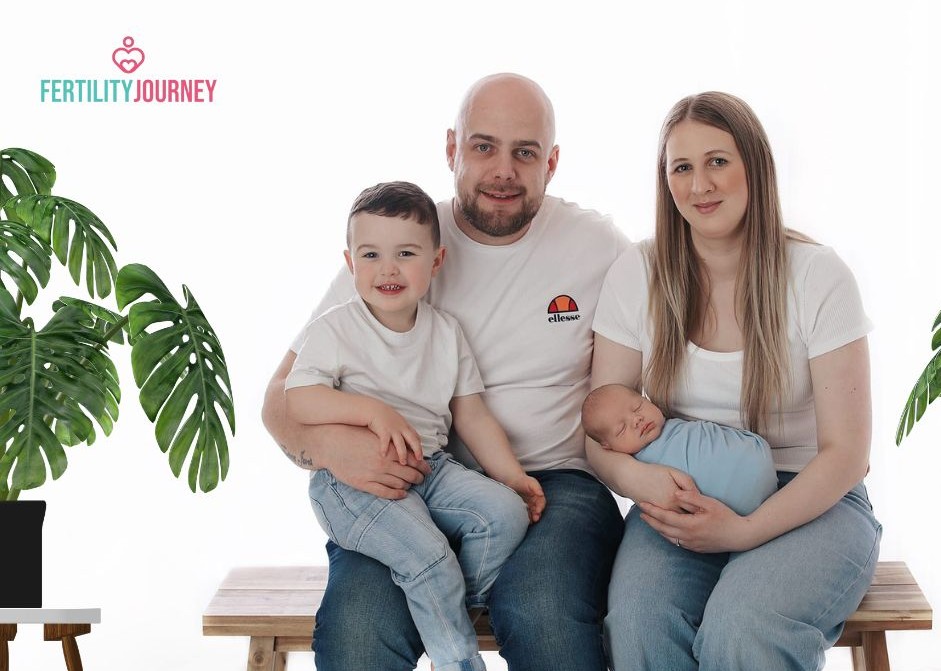
Three months later, life as a family of four was everything they had dreamed of. “Our house never stops now, but we wouldn’t have it any other way,” Kirstie said. “Wee Jack was the missing piece from our family.”
Jack proved to be “the perfect baby”—happy, content, full of giggles and smiles, even sleeping through the night. And three-year-old Jamie embraced his role as big brother beautifully, calling Jack “wee button” and helping with nappies, wipes, and feeding.
“Jamie was meant to be a big brother. He’s the most loving and caring boy,” Kirstie said proudly.
Gratitude and reflection
Looking back on their journey—from Kirstie’s diagnosis at 16, through eight years of treatment, heartbreak in Greece, success in Madrid with Jamie, and finally Jack’s arrival through UR Vistahermosa—the couple’s gratitude is profound.
“We never dreamt we would have one child, never mind two,” Kirstie said. “We are truly blessed; we could never thank them enough. They made the egg donation process plain sailing and were there for us during and after the transfer. We always wanted a sibling for Jamie, and the incredible team made our dreams a reality.”
The personalized care, the responsiveness, the warmth—everything about UR Vistahermosa had been different from their previous experiences. “If anyone is ever considering egg donation abroad, I would highly recommend UR Vistahermosa. We would like to thank them for giving us this blessing.”
Advice for women on similar fertility journeys
Kirstie’s journey offers powerful encouragement for anyone facing premature ovarian failure, repeated IVF failures, or the heartbreak of miscarriage.
Her story demonstrates the importance of persistence—after an NHS failure, a Greek clinic failure, a devastating silent miscarriage, delays, and thyroid complications, she and Chris never stopped trying. That determination gave them Jamie, and later, Jack.
Her openness about the mental and emotional challenges of pregnancy after loss—the constant worry, the fear at every scan—reminds others that these feelings are normal and valid. “It’s ok to speak out if you’re struggling,” she emphasized. “After I had Jamie, I would never have spoken about how I was feeling, but this time I feel I can be honest with my feelings.”
And her advice about finding the right clinic is clear: keep looking until you find a team that treats you with the care and respect you deserve. After years of impersonal treatment elsewhere, UR Vistahermosa’s approach made all the difference.
For couples facing similar diagnoses or challenges, Kirstie’s message is one of hope: “We both have the general mindset of never giving up.” That mindset, combined with excellent medical care and a little bit of luck, can make miracles happen—even twice.
This couple asked the same questions you might be asking
UR Vistahermosa Alicante: Dimi and Malcolm’s Six-Year Battle
UR Vistahermosa Alicante: Nathalie’s Solo Journey to Motherhood Through Double Donation
Updated: 23.02.2026