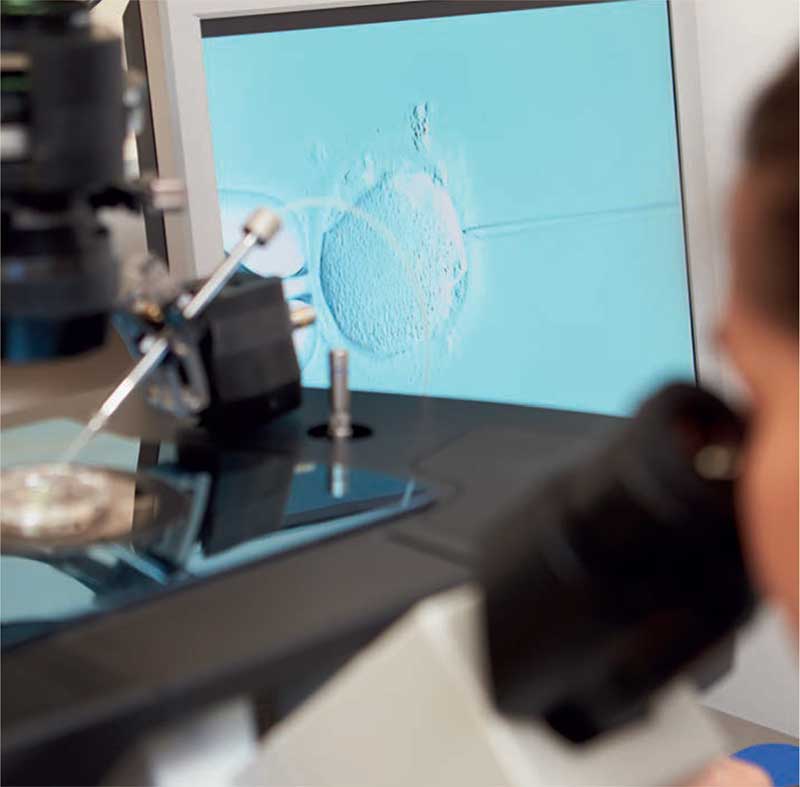
Ovarian rejuvenation therapies aim to stimulate remaining but inactive ovarian follicles in women with reduced ovarian reserve or early menopause. Techniques such as platelet-rich plasma (PRP) injections and ovarian tissue activation may improve ovarian response, though results vary and treatment remains experimental.
Understanding Ovarian Rejuvenation
Ovarian rejuvenation does not create new eggs. Instead, it focuses on reactivating residual follicles that may still exist but are no longer responding to standard ovarian stimulation.
For women who have experienced poor IVF outcomes such as retrieving very few or no eggs, this approach represents an attempt to improve ovarian function enough to make treatment possible again.
Rather than replacing IVF or egg donation, ovarian rejuvenation is positioned as a potential bridge option for carefully selected patients.
What Makes Ovarian Rejuvenation Different From Standard IVF?
Traditional IVF protocols rely on stimulating ovaries that already respond to hormones. Ovarian rejuvenation targets a different biological problem: follicles that are present but inactive.
Key distinctions include:
- Focus on biological activation, not stimulation alone
- Use of regenerative medicine principles
- Application mainly in low-responder or menopausal profiles
- Aimed at improving future IVF response rather than immediate egg retrieval
PRP-Based Ovarian Activation Explained
What Is Platelet-Rich Plasma (PRP)?
PRP is derived from the patient’s own blood. After centrifugation, platelets are separated and concentrated. These platelets contain growth factors involved in tissue repair and cellular signaling.
How PRP Is Used in the Ovaries
In ovarian rejuvenation, PRP is injected directly into ovarian tissue. The goal is to enrich the ovarian environment with growth factors that may support early follicular development.
Potential effects include:
- Increased local growth-factor concentration
- Improved ovarian microenvironment
- Reactivation of dormant follicles
PRP ovarian therapy is usually performed as a single procedure, followed by monitoring before attempting IVF stimulation.
Ovarian Fragmentation (OFFA): A Different Activation Strategy
Alongside PRP, another technique known as Ovarian Fragmentation for Follicular Activation (OFFA) is used in select cases.
This method involves:
- Surgically removing a portion of the ovarian cortex
- Fragmenting the tissue
- Reimplanting it into the ovary
The mechanical disruption of tissue is believed to trigger signaling pathways that may activate residual follicles.
OFFA is typically reserved for women with:
- Ovarian failure
- Early menopause
- Extremely limited ovarian response
Who May Consider Ovarian Rejuvenation?
This treatment is not suitable for everyone. Clinics assess candidacy carefully, as success depends on the presence of remaining ovarian follicles.
Profiles That May Be Considered
- Low ovarian reserve
- Poor response to IVF stimulation
- Early menopause
- Evidence of residual but inactive follicles
Situations Where Treatment Is Not Recommended
- Genetic causes of ovarian failure
- Previous chemotherapy
- Significant ovarian pathology
- Single ovary
A thorough evaluation is essential before proceeding.
What Outcomes Can Realistically Be Expected?
Ovarian rejuvenation is not a guarantee of pregnancy. The realistic goal is modest but meaningful: retrieving even one additional viable egg during IVF.
Reported outcomes include:
- Improved response to ovarian stimulation
- Increased egg yield in subsequent IVF cycles
- In rare cases, spontaneous pregnancy
Results vary widely, and clinics emphasize measurable improvement, not certainty.
Treatment Timing and Planning
Following PRP or OFFA treatment, patients are typically monitored before attempting ovarian stimulation. The timeline and IVF strategy are individualized based on response.
Key considerations include:
- Hormonal follow-up
- Ultrasound monitoring
- Timing IVF attempts after treatment
- Adjusting stimulation protocols
This personalized planning is a critical part of the process.
Where Is Ovarian Rejuvenation Offered?
Availability remains limited, but interest is increasing internationally.
Common Destinations for Treatment
- North Cyprus and Greece: personalized approaches for low responders
- United Kingdom and Ireland: gradual adoption of PRP and OFFA protocols
- Spain: development of ovarian rejuvenation protocols alongside advanced stimulation strategies
How Ovarian Rejuvenation Fits Into Broader Fertility Decisions
For many patients, ovarian rejuvenation is part of a decision-making process, not a final answer. It may help determine whether attempting IVF with own eggs is still feasible or whether alternative paths should be considered.
This approach allows patients to explore options with clarity rather than moving directly to irreversible decisions.
Ovarian Rejuvenation: Frequently Asked Questions
What is ovarian rejuvenation?
Ovarian rejuvenation is an experimental approach that aims to reactivate remaining but inactive follicles in women with low ovarian reserve or early menopause. It does not create new eggs; it tries to improve how the ovaries respond so IVF becomes possible again.
Does ovarian rejuvenation (PRP) actually work?
Results vary widely and it is still experimental, so it is not a guarantee of pregnancy. The realistic goal is a modest but meaningful improvement, such as retrieving even one additional viable egg or a better response to stimulation in a later IVF cycle.
Who is a candidate for ovarian rejuvenation?
It may be considered for women with low ovarian reserve, poor response to IVF stimulation, early menopause, and evidence of residual but inactive follicles. It is generally not recommended where ovarian failure is genetic, after chemotherapy, with significant ovarian pathology, or with a single ovary.
What is the difference between PRP and OFFA?
PRP (platelet-rich plasma) is a non-surgical procedure in which concentrated platelets from your own blood are injected into the ovary to enrich it with growth factors. OFFA (Ovarian Fragmentation for Follicular Activation) is surgical: a piece of ovarian cortex is removed, fragmented and reimplanted to mechanically trigger dormant follicles, and is usually reserved for ovarian failure or early menopause.
Where is ovarian rejuvenation offered?
Availability is still limited but growing. It is offered in North Cyprus and Greece for low responders, in Spain alongside advanced stimulation protocols, and is being gradually adopted in the UK and Ireland.
Key Takeaway
Ovarian rejuvenation therapies represent an evolving area of fertility medicine focused on reactivating ovarian potential rather than replacing it. While still experimental, PRP injections and ovarian fragmentation may offer select patients another chance to respond to IVF treatment when expectations are realistic and care is carefully planned.